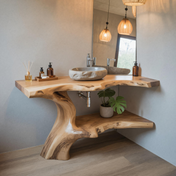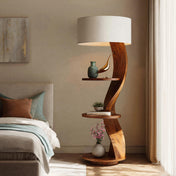

A tree bookshelf is one of the smartest ways to combine storage, display, and style in a single compact footprint. Its branching silhouette turns ordinary shelving into a design feature, making it especially useful for homeowners and renters who want practical organization without sacrificing visual appeal. But while the look is distinctive, buying the right model depends heavily on one factor: dimensions.

If a shelf is too tall, it can overwhelm the room or feel unstable. If it is too narrow, it may not hold enough books. If the depth is wrong, books may hang over the edge or valuable floor space may be wasted. This guide explains how to choose the best tree bookshelf dimensions for every space, including bedrooms, living rooms, apartments, reading nooks, and small corners.
Why Dimensions Matter When Choosing a Tree Bookshelf
A tree bookshelf is different from a standard rectangular bookcase because its shelves are staggered or angled to resemble branches. That unique shape affects how much wall width it needs, how much depth each shelf can offer, and how easily it fits into a room layout. Before buying, you should evaluate four core measurements:
- Overall height: affects visual scale, storage capacity, and stability.
- Overall width: determines whether the unit fits a narrow wall, corner, or open feature area.
- Shelf depth: affects the types of books and decor the shelf can hold.
- Base footprint: influences how much floor space is occupied and how safe the shelf feels.
Getting these proportions right helps ensure your shelf looks intentional rather than cramped or oversized.
Standard Tree Bookshelf Dimensions
Although designs vary by brand and material, most tree bookshelves fall into predictable size ranges. These ranges are a helpful starting point when comparing models.
- Height: 47 to 72 inches
- Width: 12 to 32 inches
- Depth: 6 to 12 inches
- Number of shelves: 5 to 12 branch-style shelves
Compact versions are typically under 55 inches tall and work well in tight rooms. Medium-height units, around 55 to 65 inches, offer a strong balance of storage and flexibility. A tall tree bookshelf usually measures 65 to 72 inches or more and is ideal when you want to maximize vertical storage.
Best Height for Different Room Sizes
The correct height depends on ceiling height, wall proportions, and how prominent you want the bookshelf to be.
Low-profile spaces
For rooms with standard 8-foot ceilings and limited floor area, a tree bookshelf between 47 and 58 inches is often easiest to place. It keeps the room open and works well under artwork, near desks, or beside beds.
Balanced all-purpose spaces
For most homes, a height of 58 to 65 inches offers the best blend of storage and proportion. This size is large enough to act as a focal point without overpowering the wall.
Vertical storage solutions
A tall tree bookshelf measuring 65 to 72 inches is ideal for apartments, studios, and smaller homes where vertical storage matters more than floor area. It draws the eye upward and makes use of unused wall height.
Tip: Leave at least 8 to 12 inches of visual breathing room between the top of the bookshelf and the ceiling for a more refined look.
How Wide Should a Tree Bookshelf Be?
Width is one of the most overlooked dimensions, yet it often determines whether a shelf feels practical or awkward. Many shoppers assume all tree bookshelves are compact, but some decorative models spread wider because of their branch layout.
Narrow options
A narrow tree bookshelf is typically 12 to 18 inches wide. It is the best choice for:
- Hallway corners
- Small apartments
- Bedside placement
- Entryway styling
- Tight wall gaps between furniture
This size works best when you want vertical storage with minimal intrusion into walking space.

Medium-width options
Models measuring 18 to 24 inches wide are versatile and suit most rooms. They offer better balance for storing books and a few accessories without taking over the wall.
Statement-width options
Wider units from 24 to 32 inches are better for open living rooms or feature walls. These are often used as a decorative tree bookshelf rather than purely functional storage.
Ideal Shelf Depth for Books and Decor
Shelf depth determines what the unit can actually hold. Because tree bookshelves are often designed with visual lightness in mind, some are surprisingly shallow.
- 6 to 7 inches deep: best for paperbacks, small decor pieces, and compact styling.
- 8 to 9 inches deep: ideal for standard books and everyday display use.
- 10 to 12 inches deep: best for larger books, baskets, framed photos, and mixed storage.
If you plan to store hardcovers, art books, or binders, avoid overly shallow models. For most buyers, 8 to 10 inches is the most functional depth range for a tree bookshelf.
Tree Bookshelf Dimensions for Small Spaces
When choosing a tree bookshelf for small spaces, every inch counts. The best models are slim, tall enough to maximize storage, and shallow enough to preserve walking room.
Recommended dimensions for small spaces:
- Height: 55 to 70 inches
- Width: 12 to 18 inches
- Depth: 6 to 8 inches
These proportions create storage capacity without making the room feel crowded. In compact layouts, look for a narrow tree bookshelf with a sturdy anti-tip system. This allows you to use vertical wall space safely and efficiently.
Small-space placement ideas include:
- Beside a sofa arm
- Next to a reading chair
- Between a desk and wall
- In an unused bedroom corner
- Along a hallway end wall
Choosing a Tree Bookshelf for Bedroom Use
A tree bookshelf for bedroom should feel calm, proportional, and multifunctional. Bedrooms often require softer visual lines and more restrained dimensions than living areas.
Best dimensions for bedroom use:
- Height: 47 to 63 inches
- Width: 12 to 20 inches
- Depth: 6 to 9 inches
In a bedroom, a tree bookshelf may serve multiple purposes: storing books, displaying candles or framed photos, or replacing a standard nightstand in small rooms. A narrower profile usually works best so movement around the bed remains comfortable.
If the shelf will sit close to the bed, choose a design with smooth edges, a stable base, and a finish that complements other furniture. Light oak, walnut, matte white, and black metal-wood combinations are especially popular for bedroom styling.
Best Dimensions for a Tree Bookshelf in the Living Room
A tree bookshelf for living room can be more visually expressive because living spaces are designed for gathering and display. Here, the shelf may function as both storage and decor.

Recommended living room dimensions:
- Height: 58 to 72 inches
- Width: 18 to 30 inches
- Depth: 8 to 12 inches
Living rooms can usually support a larger footprint, especially if the shelf is placed beside a media console, sectional sofa, fireplace wall, or lounge chair. A wider model also gives you room to alternate books with vases, plants, sculptural objects, and framed art, making the shelf feel like a styled feature rather than simple storage.
If your living room has ample wall space, a decorative tree bookshelf can act as an accent piece that softens the hard lines of traditional furniture.
Modern Tree Bookshelf Dimensions for Apartments
A modern tree bookshelf for apartment living should be compact, clean-lined, and easy to integrate into multipurpose rooms. Apartment furniture often has to work harder because one room may function as a lounge, office, and library at the same time.
Ideal apartment-friendly dimensions:
- Height: 60 to 72 inches
- Width: 12 to 20 inches
- Depth: 6 to 9 inches
The best apartment models emphasize vertical storage while maintaining a minimal footprint. Look for shelves with a slim silhouette, neutral finish, and enough branch spacing to prevent cluttered styling. Tall, narrow proportions often perform best in studio apartments, where floor area is limited but wall height can be used strategically.
Material and Thickness: Why Construction Affects Dimensions
Dimensions alone do not tell the whole story. Material quality and panel thickness also affect performance, especially with a branch-style silhouette where shelves extend outward.
Engineered wood
This is common in budget and mid-range options. It can look polished, but thinner panels may hold less weight over time.
Metal frame with wood shelves
This style is often seen in industrial and modern interiors. It may allow a lighter look with strong support.
Solid wood
A solid wood tree bookshelf typically offers better durability, higher weight capacity, and a more premium finish. It may also be slightly heavier and thicker in construction, which can affect the overall footprint.
For long-term reliability, shelf panels around 0.6 to 0.75 inches thick are generally preferable to thinner budget materials. If you plan to store many hardcovers, sturdier construction matters as much as the stated size.
How Much Weight Can a Tree Bookshelf Hold?
Because books are heavy, weight capacity should always be considered alongside dimensions. A taller shelf with many small branches may look spacious but still have lower load limits than a conventional bookcase.
Typical guidelines:

- Small compact models: 20 to 40 pounds total
- Medium models: 40 to 70 pounds total
- Heavy-duty or solid wood models: 70 to 120 pounds total
Check both total capacity and per-shelf capacity. If each branch shelf supports only 5 to 10 pounds, you may need to distribute books evenly. For family rooms or serious readers, a more robust solid wood tree bookshelf is often the better choice.
Measuring Your Space Before Buying
To avoid returns and layout problems, measure carefully before choosing a shelf. Use this simple process:
- Measure the available wall height from floor to ceiling.
- Measure the maximum width you can dedicate without blocking switches, vents, doors, or art.
- Measure how far the shelf can extend into the room while preserving walking space.
- Note nearby furniture, especially sofas, beds, desks, and side tables.
- Leave visual clearance around the unit so it does not feel squeezed into the room.
As a general rule, keep at least 24 to 30 inches of clear walkway space in front of a bookshelf. In tighter rooms, 18 to 24 inches may work if traffic is light.
Placement Tips by Room Type
Bedroom
Place a tree bookshelf for bedroom near a reading chair, beside a dresser, or in a corner opposite the bed. Avoid large, heavy-looking units directly beside the sleeping area unless the room is spacious.
Living room
A tree bookshelf for living room looks best next to a sofa, accent chair, TV stand, or fireplace surround. If used decoratively, leave enough negative space around it to highlight its sculptural shape.
Home office
Choose a medium-height or tall unit with practical shelf depth. It can hold books, notebooks, and small office accessories while adding style to a workspace.
Entryway
A narrow tree bookshelf can fit surprisingly well in an entry if the depth is under 8 inches. Use it for books, small baskets, and seasonal decor.
How to Style a Decorative Tree Bookshelf
A decorative tree bookshelf should not be packed too tightly. The branch layout works best when some space is left open to emphasize the silhouette.
For a balanced look:
- Alternate stacked and upright books.
- Add one small decorative object for every few books.
- Use color grouping sparingly for a curated effect.
- Include a trailing plant or small ceramic vase on one or two branches.
- Avoid overloading only one side of the unit.
This styling approach keeps the shelf functional while highlighting its sculptural form.
Common Sizing Mistakes to Avoid
- Buying too wide for the wall: always account for branch spread, not just the center column.
- Ignoring depth: shallow shelves may not hold standard hardcovers comfortably.
- Choosing too short a model: in small homes, vertical storage usually delivers better value.
- Skipping stability checks: tall models should be anchored when possible.
- Overestimating storage: decorative branch designs may hold fewer books than traditional shelves of the same height.
Recommended Dimension Ranges at a Glance
Here is a practical summary of size ranges by use case:
- For small spaces: 55 to 70 inches high, 12 to 18 inches wide, 6 to 8 inches deep
- For bedrooms: 47 to 63 inches high, 12 to 20 inches wide, 6 to 9 inches deep
- For living rooms: 58 to 72 inches high, 18 to 30 inches wide, 8 to 12 inches deep
- For apartments: 60 to 72 inches high, 12 to 20 inches wide, 6 to 9 inches deep
- For decorative display: 58 to 72 inches high, 18 to 32 inches wide, 8 to 12 inches deep
Final Thoughts
The best tree bookshelf is not simply the one with the most eye-catching design. It is the one whose dimensions align with your room size, storage needs, and overall interior layout. A compact narrow tree bookshelf may be perfect for a bedroom corner or apartment wall, while a larger decorative tree bookshelf can anchor a living room with both function and character.
Focus first on height, width, depth, and stability. Then consider material, shelf spacing, and styling potential. Whether you want a tall tree bookshelf to maximize vertical storage or a solid wood tree bookshelf for lasting durability, the right measurements will help you create a room that feels organized, balanced, and beautifully designed.