
Farmhouse Bathroom Vanity Details Worth Adding to Your Remodel
A thoughtfully designed bathroom vanity often becomes the visual and functional anchor of a farmhouse bathroom. While tile, paint, and lighting all matter, the vanity is the element you interact with every day. It shapes storage, countertop space, sink placement, and the overall warmth of the room. In a farmhouse-inspired remodel, the right vanity details can create a space that feels grounded, practical, and inviting without appearing overly themed.

Farmhouse design works best when it balances rustic texture with clean lines and durable materials. That is why many homeowners gravitate toward a natural wood bathroom vanity or a painted wood cabinet with subtle grain still visible. These options bring character and authenticity to the space while remaining flexible enough to suit modern plumbing, improved storage, and updated fixtures.
If you are planning a remodel, it helps to look beyond the vanity size alone and focus on the details that make it function better and look more custom. From sink configurations to hardware finishes, here are the farmhouse bathroom vanity details worth adding to your renovation.
Choose Real Wood for Long-Term Character
One of the most impactful upgrades you can make is selecting a vanity built from quality wood rather than flimsy composite materials. A solid wood bathroom vanity with sink offers durability, visual depth, and a more premium feel. In farmhouse spaces, real wood also ages gracefully, developing patina and subtle texture that can enhance the room over time.
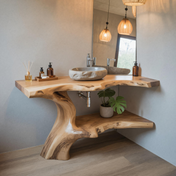
Wood species affect both style and performance. An oak bathroom vanity delivers prominent grain and a sturdy appearance, making it ideal for classic farmhouse interiors. If you prefer a slightly warmer, richer tone, a teak bathroom vanity can add a refined natural look while standing up well to humid environments. For a softer and more casual style, a lightly finished floating wood bathroom vanity can combine rustic warmth with modern simplicity.
When choosing wood, pay attention to the finish as well. Matte and low-sheen finishes usually look more authentic in farmhouse bathrooms than glossy coatings. They highlight the grain and keep the vanity from feeling too formal or polished for the style.
Add Furniture-Inspired Design Elements
Farmhouse vanities often look best when they resemble freestanding furniture instead of standard built-in cabinetry. Details such as turned legs, recessed panels, open lower shelves, and apron-front styling can give the vanity a more handcrafted presence. These touches make the bathroom vanity feel curated rather than mass-produced.
A furniture-style vanity can work particularly well in powder rooms and primary bathrooms where you want the cabinetry to stand out. For a more relaxed farmhouse look, consider a rustic wood bathroom vanity with visible wood knots, planked doors, or a distressed finish. If you want something cleaner and more transitional, choose simple Shaker doors paired with warm wood tones and understated hardware.
The key is restraint. A few tailored design details can create farmhouse charm without making the vanity feel heavy or costume-like.
Consider a Floating Layout for a Fresh Farmhouse Update
Traditional farmhouse bathrooms often feature freestanding cabinets, but a floating wood bathroom vanity can be an excellent addition if you want the room to feel more open. Wall-mounted vanities reveal more floor area, which is especially useful in smaller bathrooms where visual space matters.
A floating vanity also allows farmhouse style to evolve in a more contemporary direction. Natural oak or teak paired with a white countertop and simple black sconces can create a look that feels current while still warm and organic. This approach is ideal for homeowners who appreciate farmhouse textures but want to avoid a more overtly rustic appearance.

In practical terms, floating vanities can also simplify floor cleaning and make a bathroom feel less crowded. If your remodel includes radiant heat flooring or large-format tile, a floating installation helps show off those investments as well.
Select the Right Sink Configuration
Sink choice influences both function and farmhouse appeal. In a shared bath or primary suite, a double sink wood bathroom vanity can dramatically improve daily convenience. Two basins reduce traffic during busy mornings and help preserve personal counter space. If the room allows, this can be one of the most useful upgrades in the entire remodel.
For a farmhouse aesthetic, undermount sinks are a safe and timeless option, especially when paired with a stone or quartz countertop. If you want a more distinctive look, integrated apron-front or trough-inspired sinks can reference farmhouse utility spaces while still feeling elevated. Vessel sinks are generally less common in farmhouse bathrooms unless the overall design leans eclectic.
Single-sink vanities remain a smart choice for smaller layouts or guest bathrooms. In these rooms, investing in a solid wood bathroom vanity with sink and ample storage may provide more value than trying to maximize sink count.
Use Warm, Natural Finishes
Color and finish play a major role in how farmhouse style comes across. White painted cabinetry will always be a classic option, but many remodels benefit from the depth and authenticity of a natural wood bathroom vanity. Light to medium wood tones can soften hard bathroom surfaces and make the space feel more welcoming.
An oak bathroom vanity offers excellent versatility, pairing beautifully with white subway tile, black fixtures, aged brass hardware, and stone countertops. For a more luxurious organic look, a teak bathroom vanity introduces richer undertones that complement creams, warm grays, and earthy green paint colors.
If you do choose painted cabinetry, consider muted shades such as soft white, greige, olive, or charcoal. These colors can still support a farmhouse design while giving the vanity more personality than a plain bright-white finish.
Upgrade the Countertop for Texture and Durability
The countertop you pair with your bathroom vanity should support both the farmhouse aesthetic and everyday use. Quartz remains one of the most practical choices because it resists staining and requires little maintenance. A marble-look quartz or subtle solid white surface keeps the vanity feeling bright and timeless.
For a more traditional farmhouse expression, natural stone with gentle veining or honed texture can add softness and authenticity. If your vanity is heavily grained or rustic, a quieter countertop often creates the best balance. If your cabinet style is simple, the countertop can introduce a bit more movement and visual interest.
Backsplash height matters too. A short integrated backsplash can be practical, but a tile backsplash extending to the mirror or sconces often gives the remodel a more custom finish.

Incorporate Smart Storage Details
Beautiful design means little if the vanity does not function well. Farmhouse bathrooms often emphasize simplicity, so clutter can quickly undermine the look. Prioritize storage features that keep daily essentials hidden but accessible. Deep drawers for hair tools, drawer dividers for toiletries, pull-out organizers, and tilt-out trays in front of the sink can make a noticeable difference.
If you are selecting a solid wood bathroom vanity with sink, look for construction details such as dovetail drawers, soft-close hardware, and moisture-resistant interiors. These features improve longevity and help the vanity perform better in a humid setting.
Open shelving is another popular farmhouse detail, especially on a rustic wood bathroom vanity. It creates an airy look and provides a place for folded towels, baskets, or decorative storage. Just be selective about what remains visible so the bathroom still feels organized.
Choose Hardware That Supports the Style
Cabinet hardware may be small, but it has a major impact on the finished appearance of a bathroom vanity. Farmhouse bathrooms usually benefit from hardware that feels substantial, tactile, and understated. Matte black pulls, aged brass knobs, oil-rubbed bronze cup pulls, and brushed nickel bar handles can all work depending on the surrounding finishes.
For a more rustic cabinet, bin pulls and simple round knobs often feel appropriate. For a cleaner floating wood bathroom vanity, sleek linear pulls may be a better fit. Repeating the same finish on faucets, mirror frames, and sconces helps tie the entire vanity wall together.
Scale matters as well. Oversized drawers often look best with longer pulls, while smaller doors can handle compact knobs. Well-chosen hardware helps the vanity feel intentional and complete.
Frame the Vanity With Better Lighting
No vanity remodel is complete without proper lighting. Farmhouse bathrooms benefit from layered illumination that is flattering, functional, and visually balanced. Wall sconces mounted on either side of the mirror are usually the best option because they provide even light across the face. If side placement is not possible, a carefully sized fixture above the mirror can still work well.
Popular farmhouse lighting choices include gooseneck sconces, cone shades, schoolhouse-inspired fixtures, and minimalist metal designs in black, brass, or nickel. The right lights can make a natural wood bathroom vanity feel richer and more dimensional while improving everyday grooming tasks.
Do not forget bulb color temperature. Warm white light often complements wood tones and creates a softer, more inviting atmosphere than overly cool lighting.
Pick Mirrors That Add Balance and Character
Mirrors help define the vanity zone, and in farmhouse design they can reinforce the style without overwhelming it. Wood-framed mirrors pair naturally with an oak bathroom vanity or teak bathroom vanity, while black metal frames can sharpen the look and add contrast. Arched mirrors soften strong cabinet lines, while rectangular mirrors keep things classic and versatile.

In a bathroom with a double sink wood bathroom vanity, two separate mirrors often create better symmetry and a more custom appearance than one oversized sheet mirror. In smaller bathrooms, a single larger mirror can help bounce light and make the room feel more spacious.
Whatever style you choose, make sure the mirror scale aligns with the vanity width and lighting layout. This keeps the wall composition feeling balanced.
Bring in Texture Through Surrounding Materials
The best farmhouse vanity designs do not exist in isolation. Their impact increases when the surrounding materials support the same mood. White subway tile, zellige-style tile, beadboard, shiplap accents, limewashed walls, and warm metal finishes all pair beautifully with wood cabinetry. These textures allow a rustic wood bathroom vanity or natural wood bathroom vanity to feel integrated into the room rather than like a standalone feature.
Flooring should complement the vanity tone without matching it too closely. Soft stone-look tile, muted patterned tile, or warm porcelain planks can all work well. Repeating natural textures across the room creates a layered farmhouse look that feels polished and cohesive.
Do Not Overlook Plumbing Fixtures
Faucets are among the most-used features connected to the bathroom vanity, and their style can subtly shift the design direction. Widespread faucets often feel more classic and furniture-like, while single-hole faucets can suit a cleaner, more updated farmhouse style. Bridge faucets can make a striking statement in the right setting, especially on a vanity with a vintage-inspired profile.
Finish selection should coordinate with your cabinet hardware and lighting. Matte black remains popular for contrast, while aged brass can add warmth and softness. Brushed nickel is a safe, timeless choice that works especially well with an oak bathroom vanity or painted Shaker cabinet.
Beyond style, prioritize quality and ease of cleaning. Durable finishes and reliable internal components make a meaningful difference over time.
Tailor the Vanity to the Bathroom Size
Every design detail should support the scale of the room. In a compact bathroom, a smaller floating wood bathroom vanity or narrow solid wood bathroom vanity with sink can preserve movement and visual openness. Prioritizing drawers over oversized doors may help maximize storage in tight footprints.
In larger rooms, a substantial double sink wood bathroom vanity can ground the space and provide a luxury experience. Wider vanities also create opportunities for dedicated storage towers, matching linen cabinets, or extended counter space for decor and daily essentials.
The most successful remodels balance style with clearances, plumbing realities, and how the room is actually used. A vanity that is too large can make the bathroom feel cramped, while one that is too small may appear underwhelming and limit function.
Final Thoughts
The right bathroom vanity can transform a remodel from merely attractive to truly exceptional. In farmhouse bathrooms, the best results often come from layering practical details with natural materials and timeless design choices. A solid wood bathroom vanity with sink, thoughtfully selected hardware, strong lighting, efficient storage, and a warm finish can all contribute to a space that feels custom and enduring.
Whether you prefer a classic oak bathroom vanity, a richly toned teak bathroom vanity, a modern floating wood bathroom vanity, or a more rustic wood bathroom vanity, the goal is the same: create a bathroom that works beautifully while delivering the comfort and charm farmhouse style is known for. By focusing on these details during your remodel, you can build a vanity area that looks elevated today and remains functional for years to come.