
A bathroom vanity is often the visual anchor of the entire room. Even in a compact bath, the vanity sets the tone for color, material, storage, and everyday usability. If you want a renovation that feels significant without rebuilding every surface, changing the bathroom vanity can create one of the biggest visual payoffs in the space.

From profile and finish to sink style and hardware, small-to-medium vanity updates can dramatically shift the look of a bathroom from dated to elevated. Whether your design direction leans warm and minimal, rich and traditional, or serene and contemporary, the right vanity choice can unify the room and make it feel intentionally designed.
Why the Bathroom Vanity Has Such Strong Visual Influence
The vanity occupies a prime sightline in most bathrooms. It combines cabinetry, countertop, sink, mirror relationship, and often lighting alignment in one central zone. Because of that, changing the vanity affects more than storage alone. It alters scale, contrast, texture, and perceived quality.
A well-chosen bathroom vanity can:
- Define the room’s style instantly
- Introduce warm wood tones or crisp painted finishes
- Improve storage and countertop function
- Create a cleaner furniture-like appearance
- Balance mirrors, sconces, and wall treatments
In design terms, it is one of the most efficient ways to make a bathroom look fully updated.
Choose a Vanity Style That Matches the Room’s Architecture
One of the most impactful changes is selecting a vanity shape and style that feels appropriate to the home. A bulky, overbuilt cabinet can visually crowd a small bath, while an undersized vanity can make a large room feel incomplete. Proportion matters just as much as finish.
For traditional homes, a vanity with framed drawer fronts, subtle molding, and a refined furniture base can feel cohesive. In newer homes, cleaner lines often work better. A modern wood bathroom vanity with flat-panel fronts, integrated storage, and minimal hardware can make the room feel calmer and more architectural.
When the vanity style aligns with the room, the entire bathroom appears more polished, even if tile and wall finishes remain the same.
Switch to Natural Wood for Warmth and Depth
If your bathroom currently has a generic painted cabinet, introducing wood can create an immediate visual transformation. Natural wood brings movement, grain, and warmth that painted finishes often lack. This is especially effective in bathrooms filled with hard surfaces such as porcelain, stone, glass, and metal.
A natural wood bathroom vanity softens the space and adds an organic quality that feels timeless rather than overly trendy. Light and medium-toned woods are especially popular because they brighten the room while still adding character. Wood also works across many styles, from Scandinavian-inspired bathrooms to rustic modern interiors.
To maximize the effect, pair wood tones with simple mirrors, restrained hardware, and layered lighting. The vanity should feel intentional, not visually busy.
Consider an Oak Bathroom Vanity for Timeless Appeal
An oak bathroom vanity is one of the strongest options for homeowners who want durability, visual texture, and broad design flexibility. Oak has a distinctive grain pattern that adds richness without feeling too formal. Depending on the stain and silhouette, it can read as classic, contemporary, or organic modern.
Light oak vanities are particularly effective when you want a bathroom to feel brighter, cleaner, and more expansive. They pair beautifully with white countertops, soft beige tiles, brushed nickel fixtures, and matte black accents. Deeper oak finishes, on the other hand, add more contrast and can ground larger bathrooms with a stronger furniture presence.

Because oak bridges so many aesthetics, it remains one of the safest high-impact choices for long-term visual value.
Upgrade to a Solid Wood Bathroom Vanity With Sink
Material quality is visible. A solid wood bathroom vanity with sink often looks more substantial and better crafted than lower-cost alternatives made with heavy laminates or thin veneers. Even before someone opens a drawer, the cabinet tends to communicate permanence and quality through its weight, joinery, and finish depth.
Choosing a vanity and sink combination also simplifies design coordination. The sink shape, countertop integration, and cabinet proportions are already resolved as one composition, which can lead to a cleaner final result. In practical terms, this can help avoid mismatched elements that make bathrooms look pieced together.
If visual impact is your main goal, prioritize a vanity that feels furniture-grade. Clean drawer reveals, consistent grain, and a well-scaled sink can make the room appear more custom and expensive.
Floating Vanities Create a Bigger, Lighter Look
If your bathroom feels cramped or visually heavy, replacing a floor-mounted unit with a floating bathroom vanity can make a major difference. Wall-mounted vanities expose more floor area, which creates a sense of openness and improves sightlines. This is especially useful in narrow bathrooms, powder rooms, and contemporary remodels.
Floating vanities also offer a streamlined appearance that suits modern interiors. A modern wood bathroom vanity in a floating format can feel sculptural and elegant, particularly when paired with under-cabinet lighting or large-format tile. The cleaner shadow line beneath the cabinet adds sophistication without requiring decorative details.
For homeowners seeking a subtle but high-end visual shift, this is one of the most effective changes available.
Double Sink vs. Single Sink: Visual Balance Matters
Many people choose sink configurations based solely on function, but visual composition matters too. In some bathrooms, a single centered sink on a generous vanity creates more negative space and a calmer look. In others, double sinks provide symmetry that makes the room feel more luxurious and complete.
The best choice depends on width, storage needs, and mirror layout. A cramped double-sink vanity can actually reduce impact by creating clutter and shrinking countertop landing space. A thoughtfully proportioned single sink may feel more refined, especially in minimalist or spa-inspired bathrooms.
When selecting a bathroom vanity, think beyond daily use. Consider how the sink placement interacts with mirrors, lighting, and the width of the wall. Good visual balance always reads as more expensive.
Use Hardware to Change the Vanity’s Personality
Hardware is a relatively small detail, but it has outsized influence on the look of a bathroom vanity. Swapping basic knobs for elongated pulls, warm brass handles, or matte black bar hardware can quickly change the design language of the piece.
For example:

- Brushed brass adds warmth and a tailored feel
- Matte black introduces sharp contrast and modern definition
- Polished nickel feels classic and versatile
- Wood or wrapped pulls can reinforce organic modern styling
When upgrading the vanity, make sure the hardware scale suits the cabinet. Oversized pulls on a delicate vanity can feel awkward, while tiny knobs may get lost on a substantial wood cabinet.
Countertop Changes That Elevate the Vanity
The countertop is inseparable from the vanity’s visual impact. Even a beautiful cabinet can look underwhelming with the wrong top. Crisp white quartz remains a leading choice because it brightens the room and creates contrast against natural wood. Marble-look surfaces introduce a more luxurious character, while darker counters can add drama and definition.
Edge profile also matters. A slim, simple edge tends to feel more current than a bulky decorative one. Integrated or undermount sinks usually produce a cleaner appearance than drop-in models, particularly in modern or transitional bathrooms.
When planning a bathroom vanity refresh, think of the cabinet and countertop as one visual unit. Their relationship determines much of the final result.
Try a Japandi Bathroom Vanity for Calm Minimalism
A japandi bathroom vanity is ideal for homeowners drawn to clean lines, soft natural materials, and a sense of visual quiet. Japandi design blends Scandinavian simplicity with Japanese restraint, creating bathrooms that feel warm, uncluttered, and deeply intentional.
This style often features pale or mid-tone wood, flat-panel fronts, muted colors, and minimal ornamentation. The emphasis is on craftsmanship, proportion, and tactile beauty rather than decorative excess. A japandi bathroom vanity works particularly well with vessel sinks, textured stone, limewash walls, and soft black or brushed metal fixtures.
If your goal is to create a serene retreat, this approach can produce a dramatic transformation through understatement rather than bold contrast.
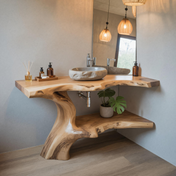
Custom Wood Bathroom Vanity Options for Tailored Impact
Sometimes the biggest visual gains come from solving layout limitations. A custom wood bathroom vanity can be designed to fit unusual wall lengths, awkward corners, plumbing constraints, or specific storage needs. More importantly, it allows you to fine-tune proportions so the vanity looks perfectly integrated into the room.
Customization can include:
- Exact width and depth for better circulation
- Special drawer configurations around plumbing
- Open shelving for decorative balance
- Specific wood species and stain tones
- Integrated electrical access or grooming storage
From a design perspective, custom sizing often avoids the common problem of a vanity looking too small, too tall, or disconnected from surrounding finishes. The result is a bathroom that feels more intentional and architecturally resolved.
Color Contrast Can Redefine the Entire Space
One of the fastest ways to create visual impact is through contrast. If your bathroom is predominantly white or light gray, a wood vanity can anchor the room and prevent it from feeling flat. If the room already contains warm tones, a softer oak or muted painted finish may create a more harmonious effect.
The key is to decide whether you want the bathroom vanity to stand out or blend in. Both can work, but the decision should be deliberate. A high-contrast vanity becomes a focal point. A tonal vanity supports a quieter, more spa-like atmosphere.

An organic modern bathroom vanity often strikes the perfect middle ground, offering enough texture to feel distinct while still maintaining a restrained, cohesive palette.
Mirrors and Lighting Should Support the Vanity
A vanity change has the most impact when surrounding elements are updated or reconsidered at the same time. Mirrors that are too small, poorly positioned sconces, or outdated light bars can diminish even the most beautiful cabinet.
To strengthen the vanity visually:
- Use mirrors scaled to the sink or drawer layout
- Center sconces carefully for symmetry and function
- Choose lighting finishes that coordinate with hardware
- Leave enough breathing room around the vanity wall
These supporting details frame the bathroom vanity and help it read as a complete design feature rather than a standalone cabinet swap.
Storage Design Affects Visual Cleanliness
Visual impact is not only about style. It is also about how clean and composed the bathroom looks day to day. Better storage reduces countertop clutter, and that directly improves how the vanity is perceived.
Deep drawers, compartmentalized organizers, pull-out trays, and concealed outlets all help maintain a tidier appearance. This is where a solid wood bathroom vanity with sink or a custom wood bathroom vanity can outperform basic builder-grade options. Better internal design creates a more streamlined everyday experience.
A beautiful vanity loses impact quickly if it is surrounded by crowded products and poor organization. Smart storage protects the aesthetic investment.
How to Choose the Right Vanity Update for Maximum Impact
If you want the biggest return visually, focus on the changes that affect silhouette, material, and contrast first. Start by asking a few practical design questions:
- Does the current vanity feel too heavy, too small, or out of style?
- Would natural wood improve warmth and character?
- Is an oak bathroom vanity better suited to the room’s finishes?
- Would a floating design make the space feel larger?
- Do you need a custom wood bathroom vanity for a better fit?
- Would a japandi bathroom vanity create the calm look you want?
Answering these questions can help narrow your options and ensure the update is more than cosmetic.
Final Thoughts
Few bathroom upgrades deliver as much visible transformation as a well-chosen bathroom vanity. It influences style, storage, material warmth, and overall perception of quality in one move. Whether you select a natural wood bathroom vanity for softness, an oak bathroom vanity for timeless texture, a modern wood bathroom vanity for sleek simplicity, or a custom wood bathroom vanity for a tailored fit, the right choice can redefine the room.
For homeowners seeking meaningful design impact, vanity changes are not minor details. They are foundational decisions that shape how the bathroom looks, feels, and functions every day. When selected with care, a bathroom vanity becomes more than a utility piece. It becomes the feature that makes the entire space feel complete.